
Trump Extends $100,000 H-1B Fee
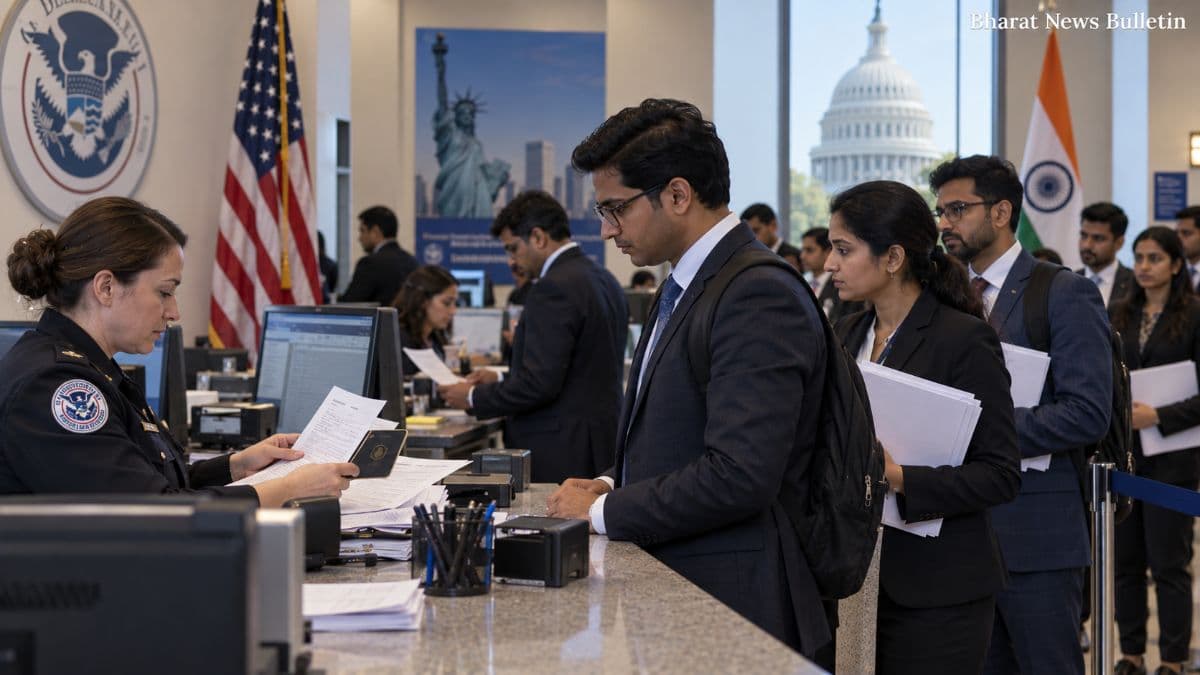
The US has extended the payment requirement for certain H-1B workers until September 21, 2027, while legal challenges continue.
US President Donald Trump has extended the $100,000 payment requirement for certain H-1B visa workers for another year, keeping the measure in place until September 21, 2027. The extension was announced by the White House on September 18.
The restriction applies to certain H-1B specialty-occupation workers who are outside the United States and whose petitions require entry into the country. The proclamation allows exceptions where the US Department of Homeland Security determines that hiring specific workers, companies or industries is in the national interest.
The H-1B programme is widely used by US technology and other companies to hire skilled foreign professionals. Indian professionals are particularly affected because people born in India accounted for 71% of approved H-1B petitions in fiscal 2024, compared with about 12% for China, according to USCIS data cited by LiveMint.
The payment requirement does not apply to every H-1B worker. According to the reported details, it does not cover existing H-1B holders renewing their visas or certain people already in the US, including eligible students changing status.
The extension comes amid an ongoing legal challenge to the policy. A federal judge in Massachusetts ruled in June that the administration's $100,000 H-1B fee was unlawful, and the US government has appealed that decision. The continued litigation means the implementation of the fee remains subject to the court process.
The White House said the extension was intended to address what it described as abuses of the H-1B programme. It also said registrations from large IT staffing and outsourcing companies had fallen 92% following the payment requirement and changes to the selection system. These are claims made by the US administration.
The administration is separately pursuing a proposal that could introduce a roughly $103,000 fee for H-1B petitions subject to the annual visa cap. That proposal is separate from the extended $100,000 payment requirement.