
Supreme Court Flags NCLT Autonomy Crisis
The Supreme Court questioned the Ministry of Corporate Affairs' control over tribunal administration, citing staff vacancies, recruitment concerns and infrastructure problems.
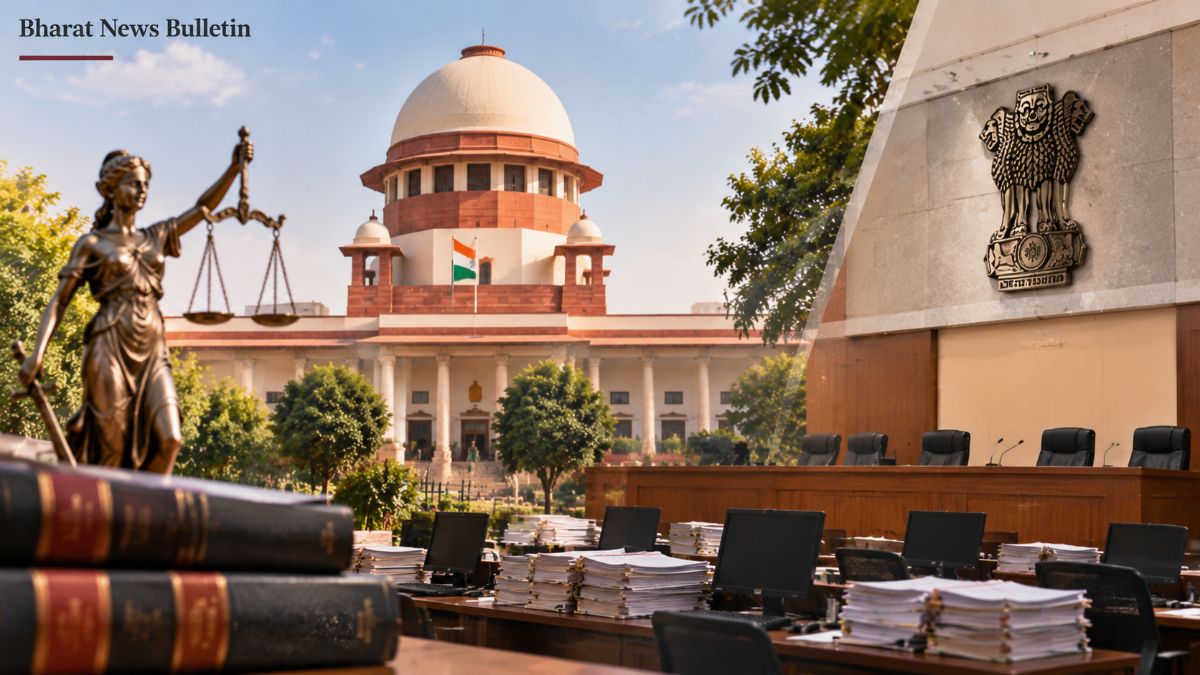
The Supreme Court on October 29 criticised the Ministry of Corporate Affairs (MCA) over its role in administering the National Company Law Tribunal (NCLT), observing that the ministry had 'completely hijacked' the institution. The court said excessive administrative control was affecting the tribunal's autonomy and stressed that its president must be allowed to manage its functioning independently.
A three-judge bench led by Chief Justice of India Surya Kant, along with Justices Joymalya Bagchi and V Mohana, made the observations while hearing a suo motu case concerning staff shortages, infrastructure deficiencies and administrative difficulties at the NCLT and the National Company Law Appellate Tribunal (NCLAT).
The proceedings also examined the MCA's decision to outsource the recruitment of administrative personnel to a private company. The arrangement reportedly covers positions such as deputy registrars, assistant registrars and stenographers. The court said appointment powers should rest with the NCLT president and indicated that private contractors should not determine the tribunal's staffing arrangements.
The bench was informed that only 67 of the NCLT's 320 sanctioned regular administrative posts had been filled, leaving 253 vacancies. Another 16 positions among judicial and technical members were also vacant, highlighting the manpower challenges facing the tribunal.
Infrastructure problems were also brought to the court's attention. The NCLT Bar Association told the bench that parts of the tribunal's principal bench building in Delhi were in poor condition, with two floors reportedly shut because of structural and infrastructure concerns. The association said these difficulties were affecting court operations.
The Supreme Court asked the presidents of the NCLT and NCLAT to submit detailed proposals within four weeks covering staffing, buildings, land and other administrative requirements. It also suggested that experienced government officials could initially be appointed on deputation, followed by regular recruitment through a phased process.
The bench issued notice on a petition challenging the outsourced recruitment arrangement and asked the Attorney General to convey the urgency of providing basic facilities to the tribunals to the Union government. It also flagged concerns over delays in Companies Act matters, observing that insolvency proceedings were receiving priority.
The court's intervention places the administrative independence and operational capacity of India's key corporate law tribunals under scrutiny. The four-week proposals are expected to help the court assess the steps required to address vacancies, infrastructure gaps and recruitment arrangements.