
Cyclone Arnab Leaves Six Dead
The severe storm struck Andhra Pradesh's coast, damaging power infrastructure, disrupting electricity and forcing more than 180,000 people to evacuate across Andhra Pradesh and Odisha.
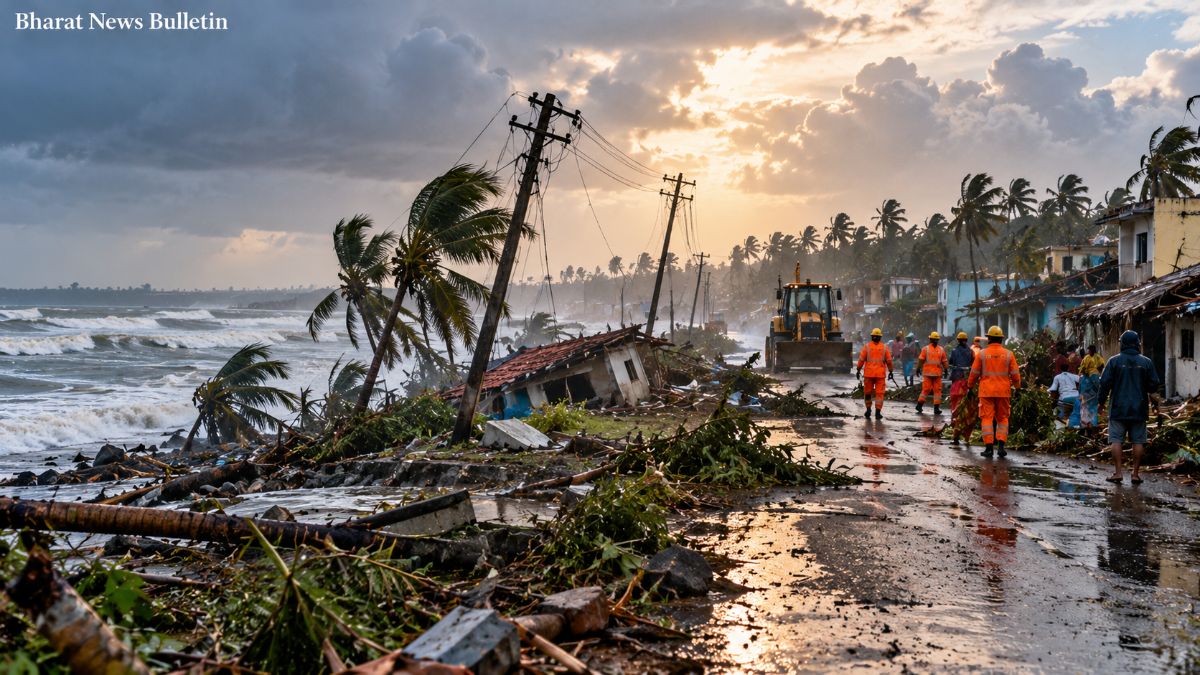
At least six people were killed after Cyclone Arnab struck India's eastern coast, bringing heavy rainfall and strong winds to Andhra Pradesh and neighbouring regions. The official death toll was reported by an Andhra Pradesh government official on October 29, a day after the cyclone made landfall.
The India Meteorological Department classified Arnab as a very severe cyclonic storm, the third-highest category on its scale. The cyclone made landfall in Andhra Pradesh early on October 28 after developing over the Bay of Bengal.
The storm caused extensive damage to electricity infrastructure, with at least 15,000 power poles damaged, according to a statement by Andhra Pradesh Chief Minister N. Chandrababu Naidu. Electricity supply had been restored in most districts by Thursday, although Konaseema and West Godavari continued to face disruptions.
Authorities evacuated more than 180,000 people from vulnerable areas in Andhra Pradesh and Odisha before the cyclone arrived. Schools were closed in some locations, while several train and flight services were cancelled as a precaution.
A cargo vessel flying the Marshall Islands flag and carrying 20 crew members remained grounded off the Andhra Pradesh coast on Thursday because of rough sea conditions. Officials said the vessel was still unable to move.
The reported death toll varied across accounts. While the official figure cited by Reuters was six, The Times of India, citing local officials, reported nine deaths linked to electrocution and the collapse of trees and houses.
Chief Minister Naidu said technology had helped authorities identify areas likely to face the greatest impact and take preventive measures to reduce casualties and property damage. Restoration work continued in districts affected by electricity disruptions.
The cyclone's impact highlights the continuing vulnerability of India's eastern coastline to severe weather systems developing over the Bay of Bengal, despite improvements in forecasting, evacuation and disaster-response arrangements.