
Houthis Claim Missile and Drone Attacks on Riyadh
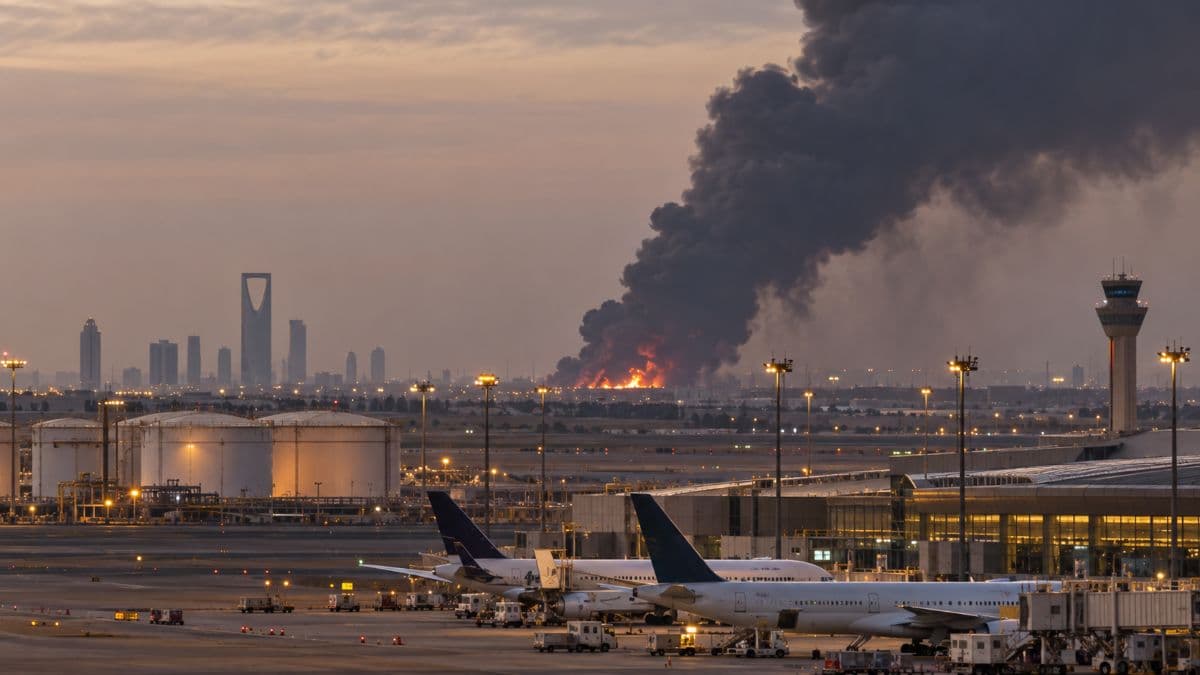
Flames and a large plume of smoke were seen near Riyadh's main airport as Saudi authorities issued overnight danger alerts before giving an all-clear.
Yemen's Houthis said they carried out missile and drone attacks on what they described as sensitive sites in Riyadh, after flames and a large plume of black smoke were seen near the Saudi capital's main airport on Saturday.
Reuters footage and photographs showed thick black smoke rising near King Khalid International Airport, with flames visible at one point from behind what appeared to be fuel-storage tanks. Booms were also heard in Riyadh before Saudi authorities later issued an all-clear.
Saudi civil defence had sent phone alerts overnight warning residents about the potential danger of aerial attacks in Riyadh and Al-Kharj, east of the capital. The warnings were subsequently lifted on Saturday morning.
The Houthis did not identify the specific sites they said they targeted in Riyadh. The group also claimed an attack on an Aramco facility in Yanbu, a Red Sea city that serves as an important Saudi oil-export hub.
At the time of the report, Saudi authorities had not confirmed the Houthis' claims, and there was no immediate response from the Saudi government's media office regarding the smoke near the airport or the claimed strikes.
The Houthis said the operation was carried out in response to an attack in Yemen's capital, Sanaa. Houthi military spokesperson Yahya Saree had earlier accused Saudi Arabia of involvement in what he described as hostile activity in Sanaa and had vowed a response.
The latest incident comes amid an escalation between the Houthis and Saudi Arabia that began in July. Houthi attacks have since targeted Saudi cities, energy infrastructure, vessels and shipping routes in the Red Sea.
The continuing attacks have also raised concerns over global energy supplies and regional shipping, particularly as the Red Sea remains an important alternative route for Gulf energy exports amid disruptions affecting the Strait of Hormuz.