
Voter Roll Disputes Put Electoral Trust Under Spotlight
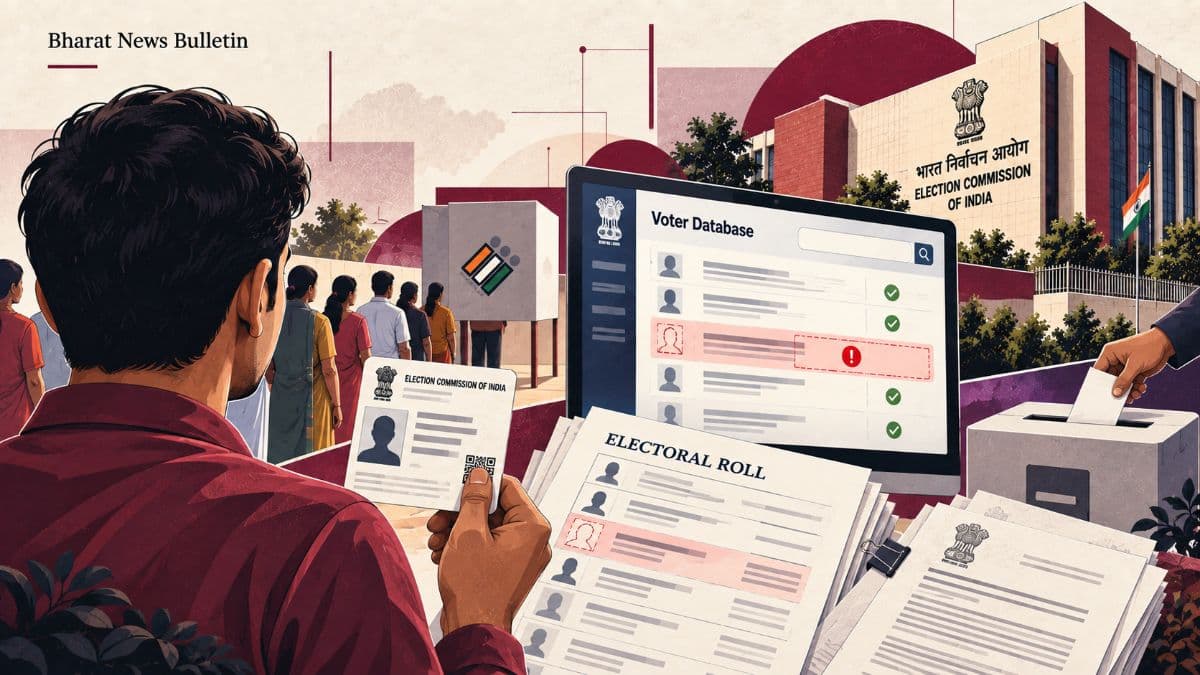
In an Indian Express opinion column, RJD MP Manoj Kumar Jha argues that recent SIR controversies raise a larger question about whether electoral technology and administrative systems adequately protect an individual citizen’s ability to exercise the right to vote.
Recent disputes over India's electoral rolls are raising a broader question about public trust in the machinery that determines who can exercise the right to vote, Rajya Sabha MP Manoj Kumar Jha argues in an opinion column published by The Indian Express.
Jha, an MP from the Rashtriya Janata Dal (RJD), frames the issue not around which political party wins or loses an election, but around whether citizens can trust the institutions responsible for maintaining electoral rolls and conducting elections. This is Jha's argument in an opinion piece, rather than a finding by a court or independent inquiry.
He draws on his experience following the 2020 Bihar Assembly election, recalling that his alliance raised concerns including those involving postal ballots and approached Election Commission officials several times during counting. Despite those objections, he says the alliance ultimately accepted the declared mandate because it considered institutional credibility important.
CORE ARGUMENT
The debate, Jha writes, should not be reduced to which party benefits electorally. His central concern is whether every eligible citizen can rely on the electoral system to preserve their opportunity to cast a vote.
The column follows an Indian Express investigation reporting that Election Commissioners Sukhbir Singh Sandhu and Vivek Joshi lodged at least 14 formal objections over 10 months concerning decisions involving voter registration, deletion and restoration of names and control of electoral-roll systems.
Jha argues that electoral participation begins well before polling day. If an eligible citizen's name is absent from the electoral roll, that person can lose the practical ability to vote regardless of what happens at the polling station.
Technology, he acknowledges, can improve election administration by reducing duplication, accelerating verification and strengthening administrative capacity. But he argues that legal rights should not become subordinate to the design or limitations of electoral software.
The recent case involving 97 voters in Goa is central to his argument. As reported separately by The Indian Express, local Electoral Registration Officers found these voters eligible after reviewing their cases, but officials encountered difficulties recording the reversals through the centrally managed electoral-roll system. The 97 names were ultimately absent from the final roll.
WHY THE GOA CASE MATTERS
97 voters — Found eligible by Electoral Registration Officers
Software limitation — Reportedly prevented the decision from being properly recorded
Final result — The names remained outside the final electoral rollJha uses the episode to argue that a technical system should not obstruct a decision made by an officer who possesses the statutory authority to make it.
Another issue highlighted in the column concerns Form 6, used for new voter registration.
The Indian Express investigation reported that the form began asking applicants whether they or their parents or grandparents appeared on an electoral roll from the previous SIR. It also reported that two Election Commissioners had objected to changing the statutory form in this manner without corresponding changes to the rules.
Jha questions the principle behind linking a new voter's registration to the electoral history of parents or grandparents, arguing that a citizen's ability to register should not operate as an inherited entitlement. This is again the author's constitutional and political argument, not a judicial determination on the legality of the provision.
The wider SIR process has generated disputes across several states. In West Bengal, for example, the Election Commission recently told the Supreme Court that 22.21 lakh of the 27.16 lakh voters deleted during the SIR had filed appeals seeking inclusion, according to an Indian Express report.
WEST BENGAL APPEALS
27.16 lakh — Voters removed during the SIR
22.21 lakh — Deleted voters who subsequently appealed for inclusion
About 82% — Share of deleted voters who filed such appeals, according to figures submitted by the Election Commission to the Supreme Court.
Jha's column ultimately argues that confidence in electoral institutions is itself an important component of a functioning democracy. Political parties can lose elections and contest again, he writes, but damage to public confidence in the institution administering elections can be considerably harder to repair.
The column should be read in the context of the author's political position: Jha is an RJD Rajya Sabha MP, and the article is explicitly published as opinion. Its arguments therefore represent his interpretation of the recent electoral-roll controversies rather than a neutral institutional finding.
At the centre of the debate is nevertheless a factual administrative question extending beyond party competition: how India's increasingly digital electoral-roll infrastructure interacts with the statutory powers of officials responsible for deciding individual voter eligibility.