
Govt, FCI Ink Foodgrain Reform Pact
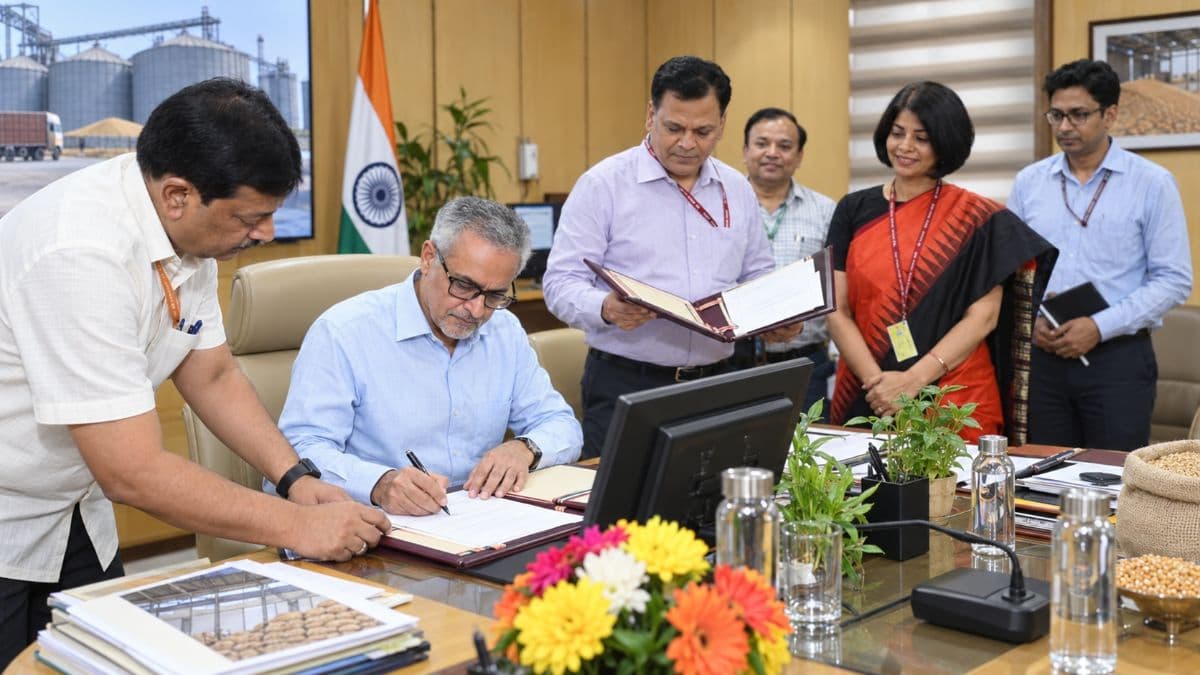
The Department of Food & Public Distribution has signed an MoU with the Food Corporation of India for FY 2026–27 to modernise India's food security infrastructure through technology and accountability.
New Delhi: In a bid to overhaul the country's foodgrain management system, the Department of Food & Public Distribution (DFPD) and the Food Corporation of India (FCI) have signed a landmark Memorandum of Understanding (MoU) for the Financial Year 2026–27. The agreement, signed in New Delhi, establishes a comprehensive, target-driven performance framework designed to enhance operational efficiency, boost transparency, and accelerate technological integration.
Focus on Modernisation and Loss Prevention
The newly signed MoU outlines several critical intervention areas aimed at streamlining India's vast food supply chain. Key priorities include the reduction of storage losses, optimal utilisation of existing warehouse capacities, logistics and supply chain optimisation, and the implementation of stringent quality control mechanisms. To facilitate this transition, the agreement mandates extensive digitisation of business processes and the adoption of advanced Information Technology solutions to monitor FCI’s nationwide operations in real time.
Furthermore, the modernisation roadmap places a strong emphasis on capacity building. Under the new framework, FCI personnel will undergo specialized training and skill development programs to equip them with the expertise required to handle emerging agricultural technologies and modern foodgrain management practices.
Target-Based Accountability via Depot Darpan
To ensure measurable outcomes, the framework links a portion of the MoU's annual targets directly to the performance of individual FCI depots. This will be monitored through the Depot Darpan Portal, a web-based evaluation platform designed to assess local infrastructure, track real-time operational efficiency, and identify structural bottlenecks.
By implementing target-based benchmarks, the government aims to strengthen physical infrastructure at the grassroots level and foster a culture of continuous improvement across all state-run storage facilities.
Securing India's Food Subsidy Resources
Established under the Food Corporations Act of 1964, the FCI has been the cornerstone of India’s food security architecture since 1965. The agency handles the mammoth task of procurement, storage, transportation, and public distribution of foodgrains across the nation. Given the massive scale of public funds dedicated to food subsidies, the government has increasingly focused on cost-effectiveness and resource optimisation.
The signing of the MoU reflects the Government’s continued commitment towards modernising the foodgrain management system and enhancing the efficiency and resilience of the country’s food security architecture. Through this performance-based framework, DFPD and FCI reaffirm their commitment to ensuring that food subsidy resources are utilised in a cost-effective and transparent manner.
The outcome-oriented approach introduced in this MoU is expected to significantly minimize leakages, reduce administrative overheads, and ensure that the benefits of the government's food subsidy programs are delivered efficiently to millions of beneficiaries nationwide.
More from india
Related articles coming soon.