
AIIB Plans Bigger India Water Financing Push
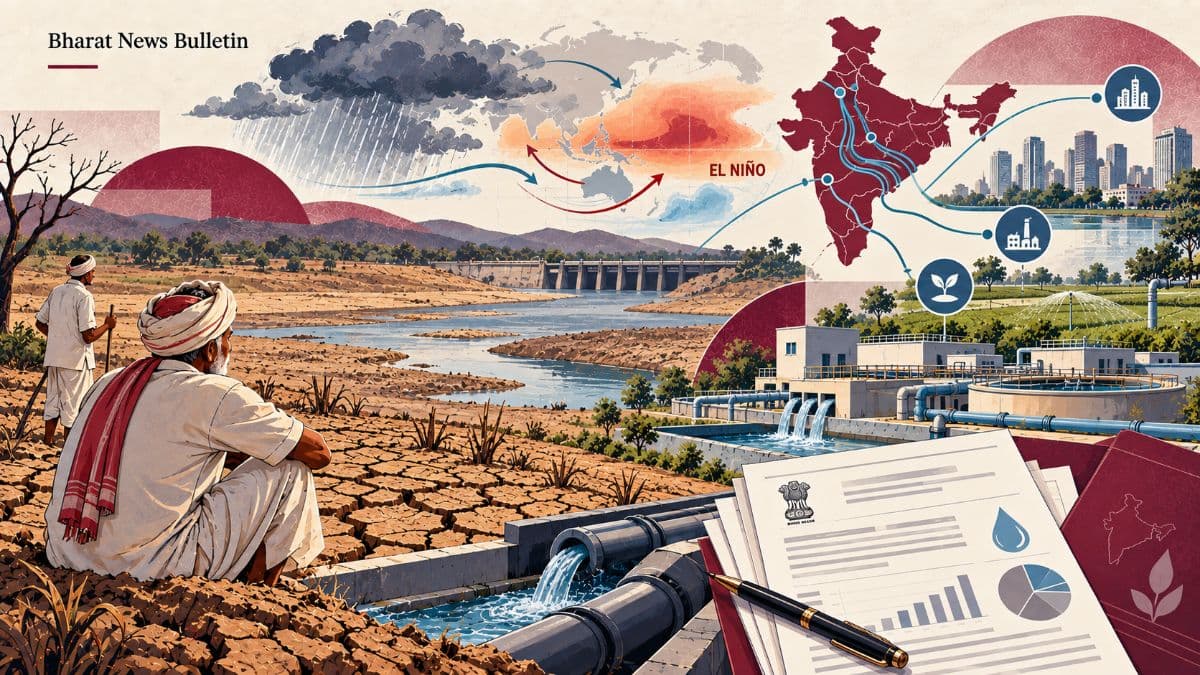
The multilateral lender is looking to expand funding for water infrastructure and policy reforms as India faces a 15% monsoon rainfall deficit and its driest monsoon in 17 years.
The Asian Infrastructure Investment Bank (AIIB) plans to significantly expand its water-sector financing in India, as worsening El Niño conditions intensify pressure on water supplies, agriculture and economic growth.
The Beijing-headquartered multilateral lender is looking to finance a broader pipeline of critical water infrastructure while also offering policy-based loans to support reforms in water governance, AIIB Acting Chief Economist Jang Ping Thia told Bloomberg News.
AIIB INDIA SNAPSHOT
$13.8 billion — Total AIIB financing approved for India since inception
Less than 7% — Share currently going directly to water projects
15% — India's monsoon rainfall deficit this season
Since 2009 — India is heading toward its driest monsoon in 17 years
India is AIIB's largest borrowing market, but direct lending to water projects represents only a small portion of its overall financing in the country. The lender now sees water security as an increasingly important economic and infrastructure challenge as extreme weather affects agriculture, cities and industrial activity.
The financing push comes during an unusually weak monsoon. India's cumulative rainfall is running around 15% below the long-term average, while El Niño conditions have intensified drought concerns in several regions.
AIIB is considering financing for urban water utilities, industrial wastewater treatment and reuse, groundwater replenishment and other water infrastructure. Broader infrastructure loans could also incorporate water-conservation requirements.
One example is a $1.1 billion programme in Maharashtra under which water-conservation measures could include automatic shut-off mechanisms for solar-powered irrigation pumps. Such measures are intended to improve the efficiency of water use while infrastructure investment expands.
The scale of India's potential water-investment market is substantial. A new study jointly released by AIIB and the Council on Energy, Environment and Water (CEEW) estimates that treated wastewater reuse represents an investment opportunity of around $35 billion, while micro-irrigation could represent a market of approximately $118 billion.
WATER INVESTMENT OPPORTUNITY
$35 billion — Potential market for treated wastewater reuse
$118 billion — Potential micro-irrigation opportunity
~85% — Current water-sector financing supported through public revenues
Up to 80% — Share of India's freshwater used by agriculture
At present, roughly 85% of financing in India's water sector comes from public tax revenues, according to the AIIB-CEEW assessment. Expanding private investment is therefore considered important for meeting the scale of infrastructure required.
Urban water utilities may provide one of the more practical entry points for private capital because mechanisms such as smart metering and household billing can generate identifiable revenue streams. Agriculture presents a more complicated challenge despite accounting for up to 80% of India's freshwater consumption.
The joint study argues that India's long-term economic competitiveness will increasingly depend on water security because reliable supplies underpin agriculture, industry, energy production and urban development. It also notes that more than 40% of India's thermal-power capacity is located in water-stressed regions.
The proposed expansion of AIIB financing therefore comes as water moves beyond being primarily an environmental issue to become a larger economic, infrastructure and climate-resilience concern for India.
AIIB has not announced a single new overall funding commitment for the expansion described by Thia. Instead, the lender is signalling its intention to build a larger pipeline of water-related projects and potentially use policy-linked financing as India responds to increasing water stress.