
India Clears ₹2.12 Lakh Crore Defence Proposals
The Defence Acquisition Council grants in-principle approval for military procurement, with around 82% of the proposed acquisitions planned from Indian industry.
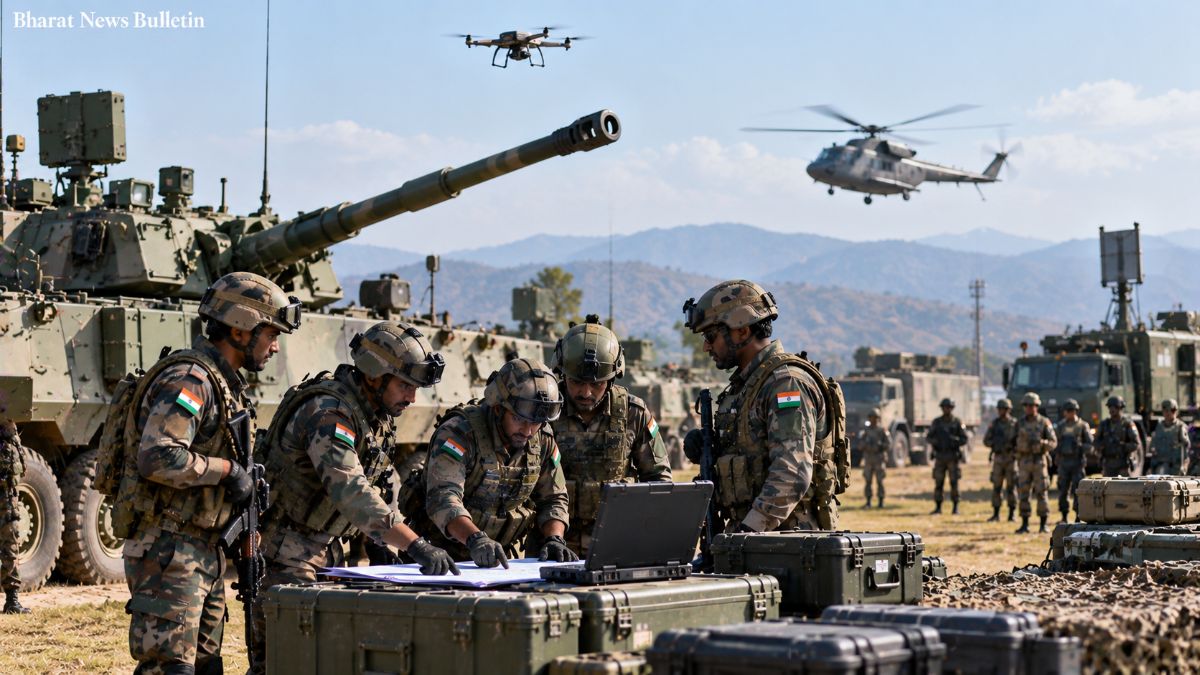
India’s Defence Acquisition Council (DAC), chaired by Defence Minister Rajnath Singh, on October 26, 2026, granted in-principle approval to capital acquisition proposals worth approximately ₹2.12 lakh crore for the armed forces. The decisions cover a range of military platforms, surveillance systems, weapons and air-defence equipment.
The approvals, formally known as Acceptance of Necessity (AoN), represent an initial administrative clearance for proposed acquisitions. They do not mean that all contracts have been signed or that the equipment has already been delivered.
For the Indian Army, the proposals include high-mobility vehicles, self-propelled tracked gun systems, light multi-role helicopters, very short-range air-defence systems, counter-drone systems, surveillance unmanned aerial vehicles and integrated surveillance and strike systems. Long-range kamikaze drone systems are also among the listed proposals.
The proposed high-mobility vehicles are intended to improve movement and logistical support in challenging terrain. Light multi-role helicopters are planned for use by both the Army and the Indian Air Force in reconnaissance, surveillance, combat, search-and-rescue operations, humanitarian assistance and disaster relief.
The Navy’s approved proposals include an Active Offboard Decoy System and other major naval platforms. The decoy system is intended to strengthen protection against modern anti-ship missiles, while the proposed platforms are expected to enhance the Navy’s operational and combat capabilities.
For the Indian Air Force, the council approved proposals covering helicopters, air-defence systems, weapons and a mobile X-band Doppler weather radar system. Special utility helicopters are intended to support air-transport requirements, while the radar system is designed to provide high-resolution, localised weather surveillance in forward areas.
The Ministry of Defence said approximately 82% of the procurements covered by the approvals would be sourced from Indian industry. The emphasis on domestic procurement aligns with efforts to strengthen indigenous defence manufacturing and increase the participation of Indian companies in supplying military equipment.
The proposed acquisitions span mobility, battlefield awareness, air defence, unmanned systems and naval protection. Their eventual implementation will depend on subsequent procurement processes, contract decisions and delivery schedules.