
Intuitive Launches da Vinci 5
The robotic surgery company has introduced its latest-generation system in India and is preparing for future telesurgery capabilities
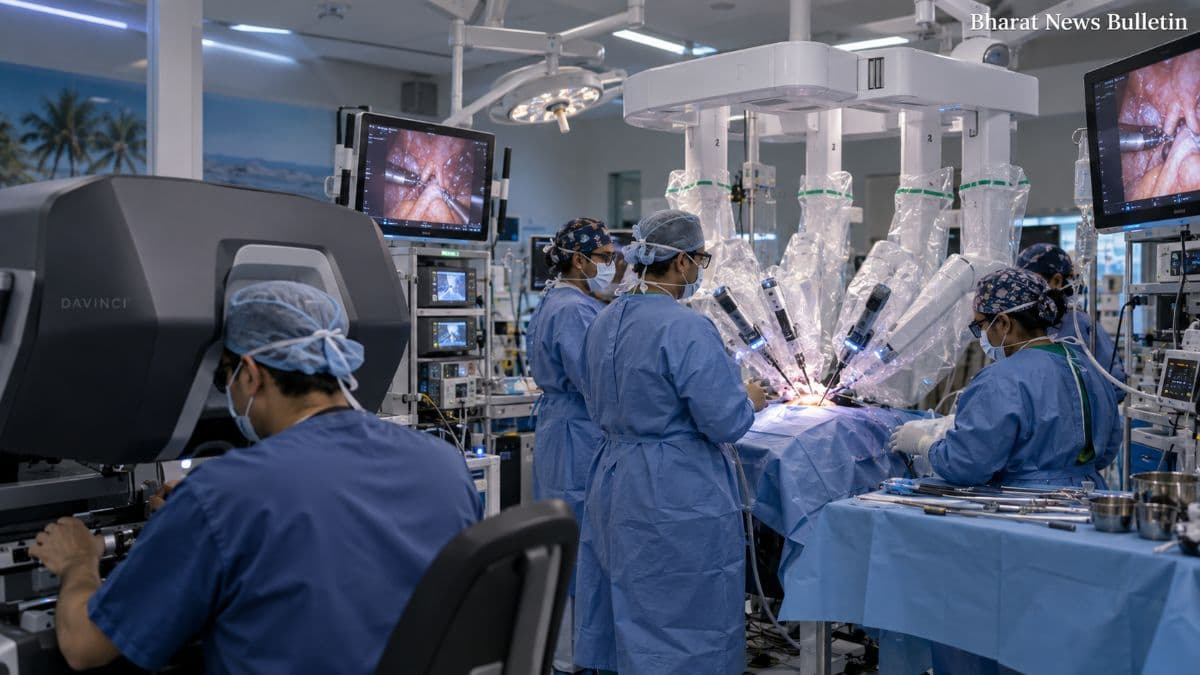
Intuitive has introduced its latest-generation da Vinci 5 robotic-assisted surgical system in India, as the company looks to expand advanced robotic surgery and eventually introduce telesurgery capabilities in the country.
The US-based company is developing telesurgery as a software-enabled capability for da Vinci 5. Intuitive expects to begin introducing the technology globally around late 2027 or early 2028, with India among its priority markets. Any deployment in India will require regulatory approval.
Initially, the company's telesurgery approach is focused on remote surgical collaboration, rather than having a doctor perform an entire operation remotely without another surgeon present with the patient. Intuitive envisages specialists in major cities remotely assisting procedures taking place at hospitals farther away and taking control during complex portions of an operation.
The launch of da Vinci 5 comes as robotic-assisted surgery expands in India. The country already has more than 275 da Vinci systems and 2,000 trained robotic surgeons, with more than 200,000 da Vinci procedures performed so far, according to the report.
Da Vinci 5 features more than 150 design enhancements compared with the previous platform. Its capabilities include Force Feedback, which allows surgeons to sense forces applied to tissue through the console, along with enhanced 3D imaging and an updated surgeon console.
The system also provides 10,000 times more computing power, creating a platform for future software and AI-enabled capabilities. Intuitive is working on technologies including real-time anatomical identification, intraoperative guidance and elements of supervised autonomy.
Intuitive will continue selling its existing fourth-generation systems in India rather than immediately replacing them with da Vinci 5. The company says the new platform is intended to support the continued development of robotic-assisted surgery as well as its longer-term focus on connected surgery and telesurgery.