
Rabi 2026 Roadmap Focuses Climate Resilience
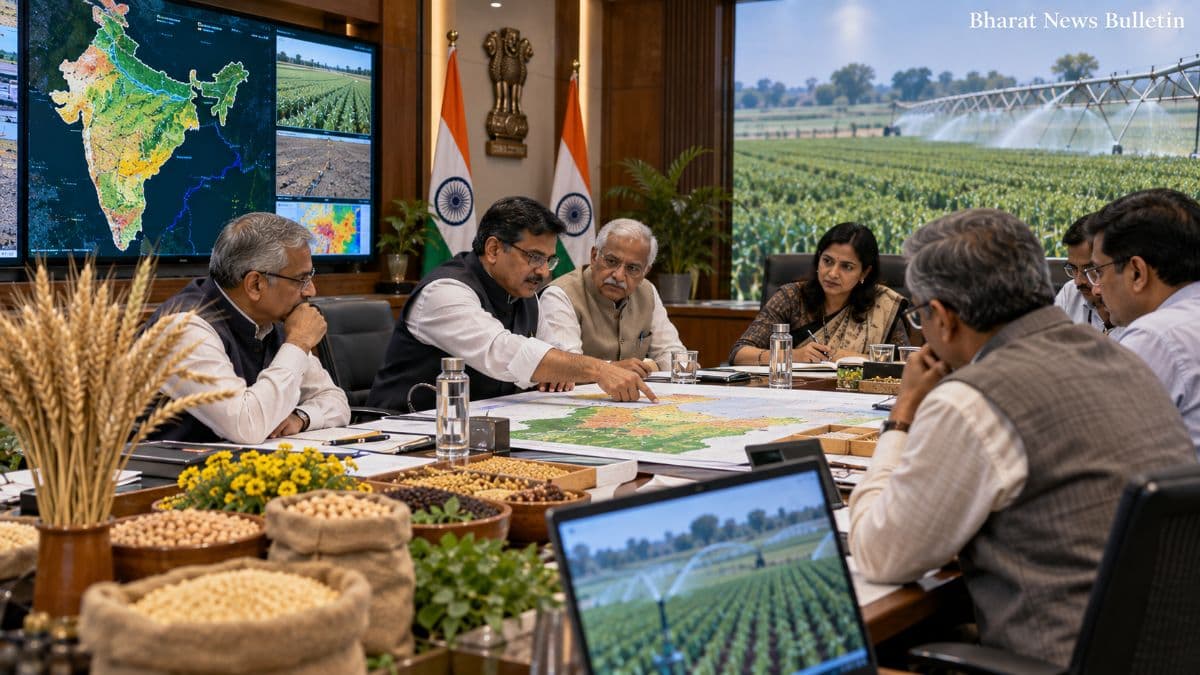
The Centre has asked states to align water availability, crop planning, seed and fertiliser supply, procurement and digital monitoring ahead of the rabi season.
The Centre has called on states to strengthen preparations for the 2026 rabi season through climate-based crop planning, better water management, timely availability of seeds and fertilisers, and closer monitoring of crop conditions.
Union Agriculture and Farmers Welfare Minister Shivraj Singh Chouhan made the call while inaugurating the two-day National Agriculture Conference–Rabi Campaign 2026 in New Delhi on September 28. The conference is aimed at developing a coordinated strategy between the Centre and states for the upcoming rabi season.
Chouhan asked states to prepare a “water budget” before finalising crop plans. Areas facing limited irrigation availability have been advised to consider crops requiring less water, particularly pulses and oilseeds, while taking soil moisture and local irrigation conditions into account.
The minister also highlighted drought conditions in Maharashtra and Karnataka. According to the government, a central team will conduct a ground assessment in Karnataka on October 3, while a central team will also be sent to Maharashtra. Chouhan said he would visit the affected states with his team.
Timely seed availability was identified as another priority. States have been asked to assess demand, select suitable crop varieties for different regions and ensure distribution before sowing begins. The Centre also stressed the need for adequate fertiliser supplies and balanced fertiliser use to control cultivation costs and protect soil health.
The government has asked states to give greater attention to pulses and oilseeds, particularly in areas left fallow after paddy cultivation. Chouhan also called for advance procurement planning, saying central agencies such as NAFED and NCCF could procure directly from farmers if state-level procurement does not take place on time, subject to the required arrangements.
The conference also focused on farmer credit and digital agriculture. States were asked to identify gaps in Kisan Credit Card coverage, particularly among small and marginal farmers, and accelerate Farmer ID and AgriStack-related work to strengthen digital delivery of agricultural schemes.
The Agriculture Ministry has further proposed weekly monitoring of crop conditions, sowing progress, germination, disease outbreaks and market prices. The aim is to identify emerging problems earlier and enable quicker interventions during the season.
The second day of the conference, scheduled for September 29, will include discussions with state agriculture ministers on weather forecasts, fertiliser availability, digital agriculture, farmer registries, pulses and edible-oil missions, the PM Dhan-Dhaanya Krishi Yojana, marketing reforms and the role of ATMA and KVKs.