
Pulses Prices Rise Up to 11%
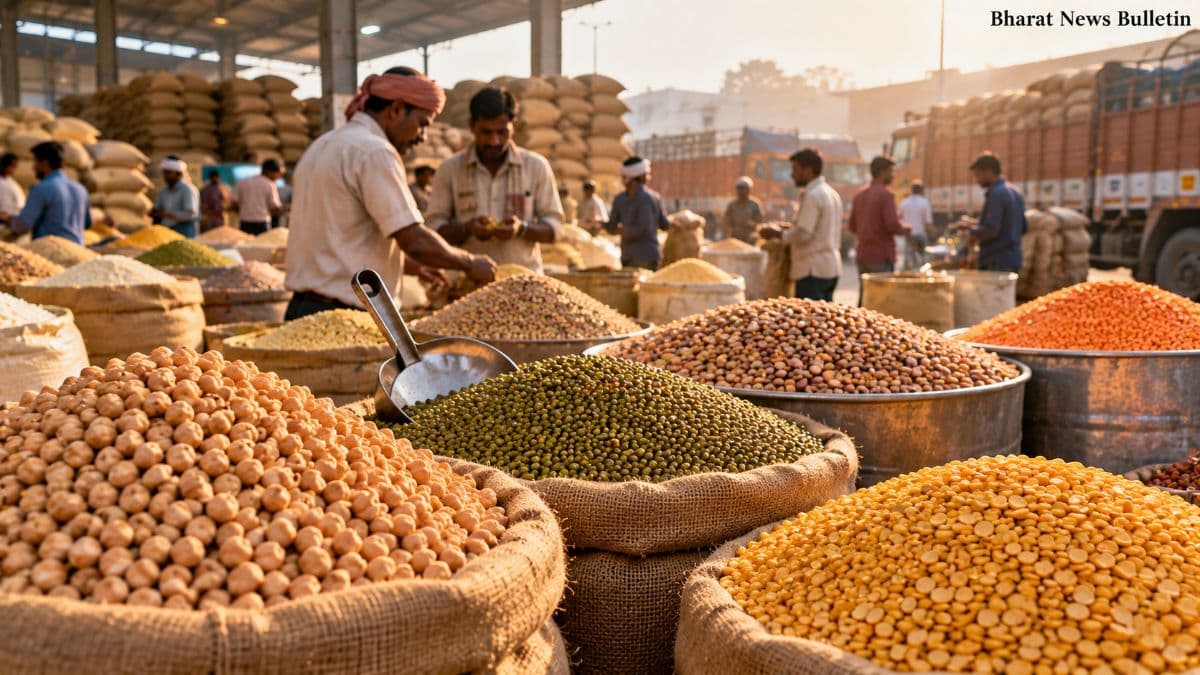
Wholesale prices of chana, moong, tur and matar have climbed sharply as festive demand, moisture stress and supply concerns tighten the market.
Wholesale prices of major pulses in India have risen sharply over the past month, with chana, moong, tur and matar recording increases of up to 11%, according to data from the Indian Pulses and Grains Association (IPGA). The rise comes as festive demand strengthens while concerns over crop availability and supplies grow.
Chana, India's largest-consumed pulse, recorded an 11% month-on-month increase in ex-Delhi wholesale prices and a 5.5% rise over the latest week. Moong prices increased 10.6% over the month and 4.3% over the week, while tur rose 6.5% and matar increased 6% during the same monthly period.
KEY NUMBERS
Over the past month, chana prices rose 11%, moong 10.6%, tur 6.5% and matar 6%, according to IPGA data.
Industry executives attributed the price increases to growing concerns over crop deficits following uneven monsoon conditions, along with moisture stress that could affect rabi sowing. Karnataka and Maharashtra have declared drought in large parts of their territories, adding to concerns about agricultural output.
Satish Upadhyay, secretary of IPGA, said chana prices were being affected by several factors, including concerns over moisture availability for rabi sowing and expectations of lower chana supplies from Australia compared with last year. He also pointed to higher international prices for yellow peas, which can serve as a substitute for chana.
YEAR-ON-YEAR RISE
Compared with a year earlier, prices of chana were up 23%, urad 24% and matar 47%, while masur and moong recorded more moderate increases of 2% and 4%, respectively.
Festive demand is providing another source of support to pulse prices. The increase in demand comes at a time when supply expectations are being closely watched because of weather conditions and developments in major producing and exporting regions.
Supplies of yellow peas have also come under pressure, with industry participants pointing to reduced supplies from Russia amid its ongoing war with Ukraine. The combination of domestic crop concerns, international supply conditions and stronger seasonal demand has therefore contributed to the recent firming in wholesale pulse prices.