
Maharashtra Drought Deepens After Rain Gaps
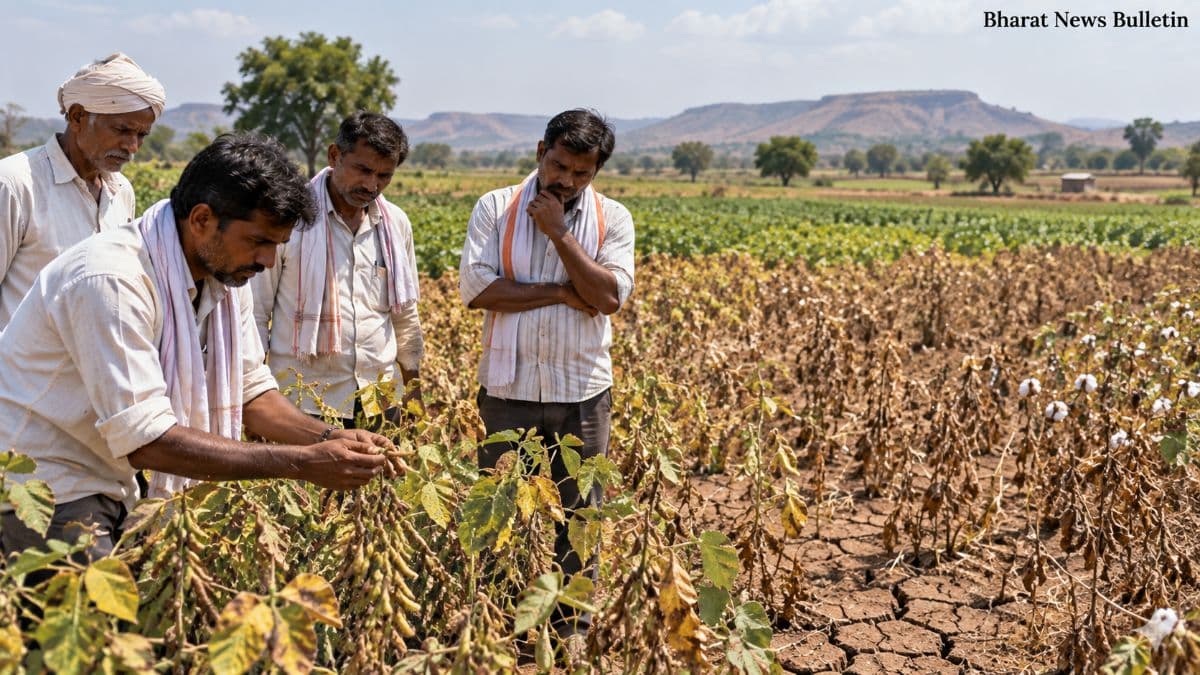
Sakri in Dhule saw monsoon rain arrive early but prolonged dry spells later damaged kharif crops despite relatively healthy seasonal rainfall.
Maharashtra is facing a severe drought situation in several areas after long gaps between rainfall spells damaged crops during the kharif season. Sakri taluka in Dhule district is among the areas affected, despite receiving substantial rainfall earlier in the monsoon.
The situation highlights the difference between total seasonal rainfall and its distribution. In Sakri, rain arrived at the beginning of the monsoon, encouraging farmers to sow crops, but the subsequent prolonged dry period left fields without sufficient moisture during critical stages of crop growth.
The Maharashtra government has declared 265 of the state’s 358 talukas drought-affected, covering nearly three-fourths of the state. District collectors have been tasked with assessing crop losses and preparing relief plans.
The Nashik division has also recorded sharp variations in rainfall. According to a state government resolution, 49 of its 54 talukas were placed on the drought list. Sakri, along with Akole in Ahilyanagar and Parola in Jalgaon, recorded more than 100% of expected rainfall but were affected by dry spells lasting more than 21 days.
Agriculture officials said the prolonged gaps between rainfall spells caused significant damage to kharif crops despite relatively high cumulative rainfall in some areas. Soybean, cotton, maize, tur, bajra, moong and urad have faced moisture stress in affected parts of the region.
Across Maharashtra, the rainfall deficit has also been accompanied by uneven distribution. The state recorded an 18% rainfall deficit this monsoon season, compared with a 13% deficit nationally, while regional variations have been particularly pronounced.
The rainfall pattern has raised concerns for the upcoming rabi season as depleted soil moisture could influence farmers’ decisions on sowing crops such as chana and jowar.
The Sakri situation therefore illustrates a broader agricultural challenge: adequate cumulative rainfall does not necessarily prevent drought-like conditions when rain is concentrated in short periods and followed by extended dry spells.