
Indian Rupee, Bonds Face Pressure as Oil Prices Stay Elevated
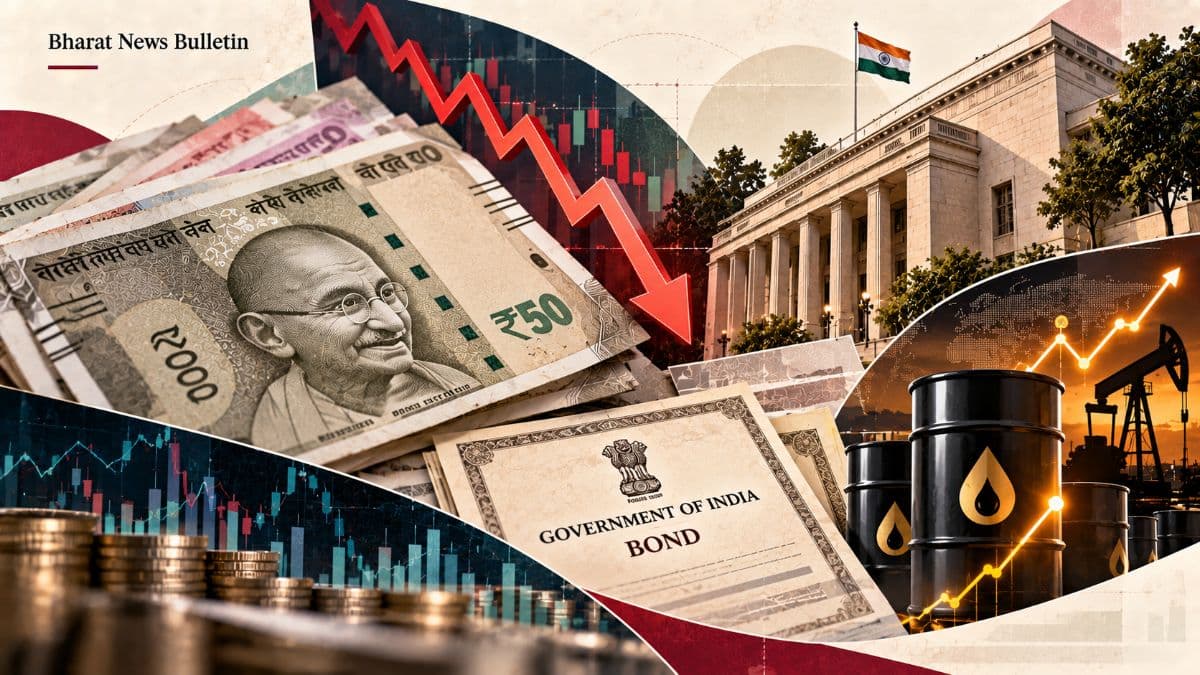
Elevated crude oil prices, multi-year highs in global bond yields and growing expectations of an RBI rate hike are expected to keep the rupee and Indian government bonds under pressure during the holiday-shortened week.
The Indian rupee and government bonds are expected to remain under pressure this week, as elevated crude oil prices, high global bond yields and growing expectations of tighter monetary policy from the Reserve Bank of India weigh on domestic financial markets.
The rupee ended Friday at ₹95.8150 against the US dollar, remaining broadly unchanged over the week. Traders expect the RBI to continue intervening in the foreign-exchange market after its actions helped keep the currency within the ₹95.50–₹96 range last week.
Fresh uncertainty surrounding the conflict involving Iran has added to concerns over oil prices. US President Donald Trump said over the weekend that he had rejected an Iranian proposal aimed at reopening the Strait of Hormuz and ending the fighting, while Iran maintained that diplomacy remained the route to resolving the conflict.
For India, sustained high crude prices are particularly important because the country depends heavily on imported energy, meaning elevated oil costs can add pressure to the rupee and broader inflation outlook.
HIGHLIGHT: The rupee closed at ₹95.8150 per US dollar on Friday, while India's benchmark 10-year government bond yield ended at 7.1194% after rising for a sixth consecutive week.
India's foreign-exchange reserves also fell by nearly $15 billion to $765.9 billion in the week ended September 15, according to data released Friday.
Pressure is also building in the government bond market. Traders expect the benchmark 10-year yield to trade around 7.05%–7.15% as markets monitor crude oil, US Treasury yields and expectations surrounding the RBI's upcoming monetary-policy decision.
The benchmark yield rose five basis points last week to 7.1194%, marking its sixth consecutive weekly increase. Since August 17, the yield has climbed by 36 basis points, its longest rising streak in more than a year.
The RBI has meanwhile been working to absorb excess liquidity from the banking system. It has already sold ₹75,000 crore worth of bonds and is scheduled to sell another ₹25,000 crore of securities on Monday.
The liquidity surplus had previously surged following a much larger-than-expected $133 billion inflow through the RBI's special foreign-exchange mobilisation scheme.
Markets will now closely monitor RBI liquidity operations, crude oil prices and global bond yields, alongside the central bank's October Monetary Policy Committee decision.
Several important economic indicators are also due. India's August industrial output data is scheduled for September 28, while August fiscal-deficit figures are due on September 30. Global investors will additionally watch US employment and inflation data for clues about the future direction of American interest rates.
With energy prices elevated and expectations of tighter monetary policy increasing, movements in crude oil and central-bank actions are likely to remain key drivers for both the rupee and India's government bond market in the days ahead.