
India’s Pumped Storage Push Needs ₹7.36 Trillion
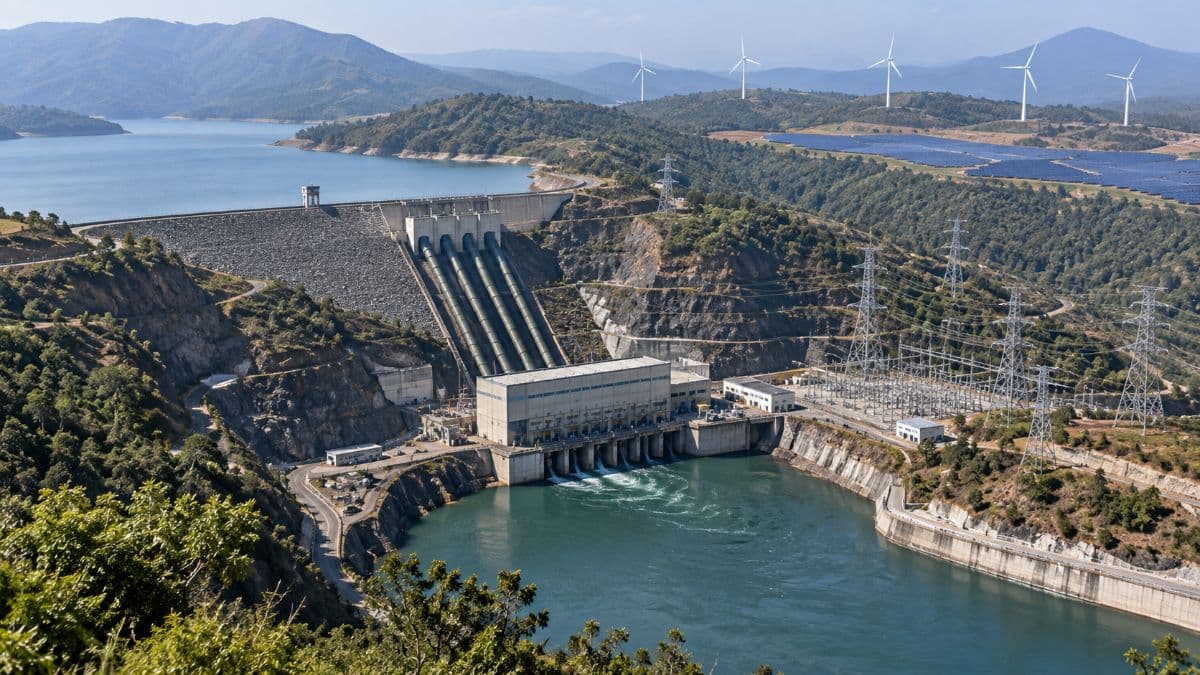
India may need an estimated ₹7.36 trillion to develop 122.77 GW of pumped storage capacity across 87 projects as the country expands renewable power and seeks greater grid stability.
India’s planned expansion of pumped storage capacity could require an investment of about ₹7.36 trillion as the country works to build large-scale energy storage infrastructure alongside its growing renewable power capacity.
The pipeline includes 122.77 GW of pumped storage capacity spread across 87 projects. The expansion is particularly important as India works toward its target of 500 GW of non-fossil fuel power capacity by 2030. Pumped storage plants can store surplus renewable electricity during periods of lower demand and release it when electricity demand increases, helping manage the intermittent nature of solar and wind power.
Central Electricity Authority data shows that 15.87 GW of pumped storage projects were under construction as of August 2026, while another 10.4 GW had received CEA clearance. Survey and investigation work was underway for another 96.5 GW of potential capacity. The CEA has also prepared a roadmap targeting 100 GW of pumped storage capacity by 2035-36.
The CEA roadmap estimates an average pumped-storage development cost of around ₹6 crore per MW, putting the estimated investment required for 122.77 GW at approximately ₹7.36 trillion. India currently has 7.42 GW of pumped storage capacity, including the 1,000 MW Tehri project commissioned in 2025, while the country's estimated pumped-storage potential stands at 345.38 GW.
The storage push comes as 43 GW of solar capacity has yet to find buyers, with power distribution companies making distressed sales of green electricity on exchanges at prices significantly below procurement costs.
Pumped storage projects are considerably more expensive upfront than battery energy storage systems. Their estimated cost is around ₹6 crore per MW compared with approximately ₹2 crore per MW for battery systems, and pumped storage projects can take up to five years to build. However, pumped storage plants can have lifecycles of around 100 years—roughly 10 times that of battery systems—and generally provide discharge durations exceeding six hours, compared with up to four hours for current battery projects.
Several major companies are already involved in projects under construction. These include Adani Group with 3 GW across Andhra Pradesh and Maharashtra, Tata Power with 1 GW in Maharashtra, and JSW Energy with 1.5 GW in Maharashtra.
As solar and wind capacity expands, longer-duration storage is expected to become increasingly important for balancing India’s electricity grid. CEA resource-adequacy studies indicate that around six hours of long-duration storage will be required to integrate higher volumes of renewable energy beyond 2030.